
Instead of doomscrolling
A toolbox to make those election jitters a little less jittery.


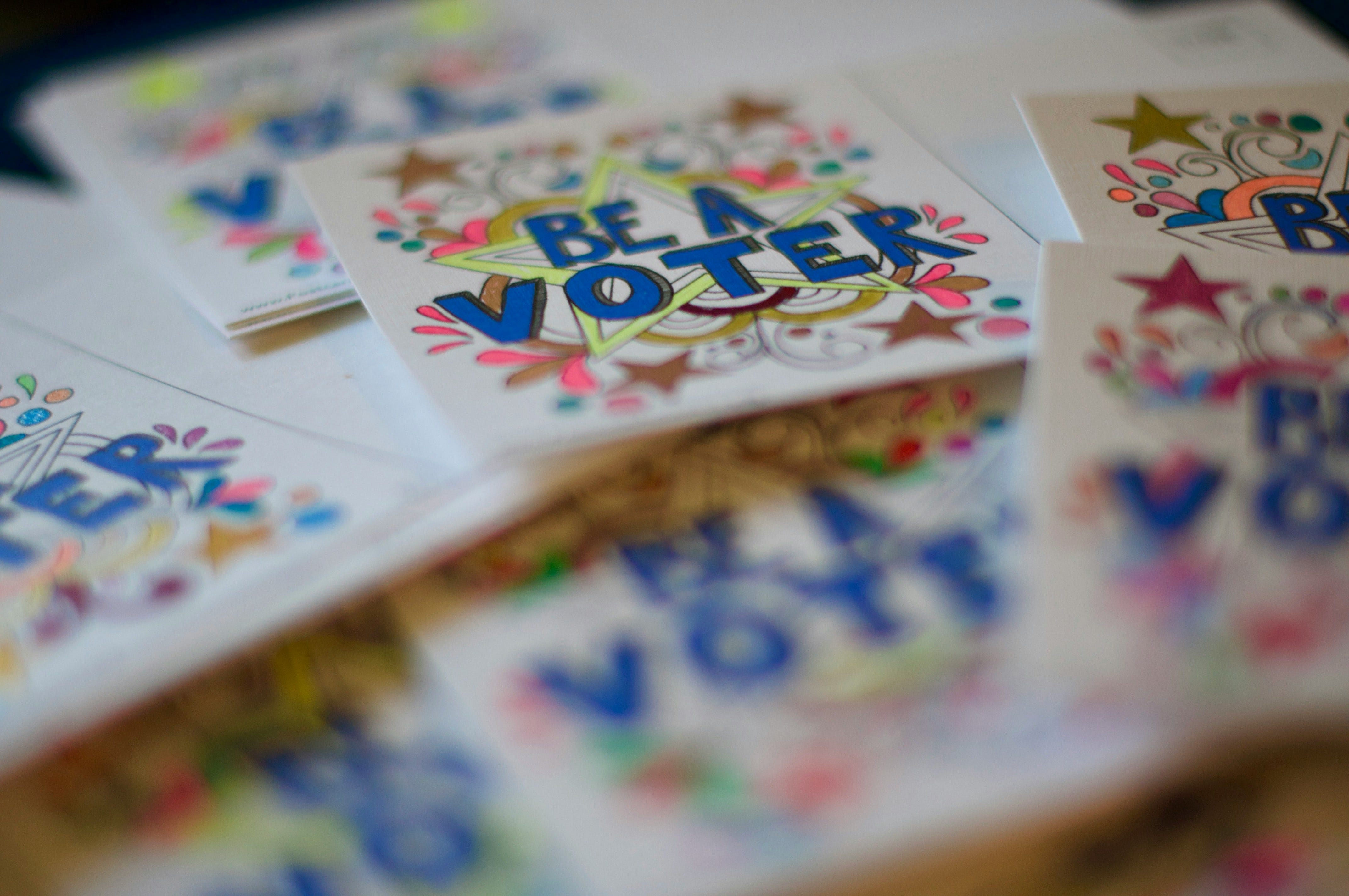
1. Get out the vote
In Looking Forward (Grist’s climate solutions newsletter), Claire Elise Thompson writes, “If you’re feeling an ever-increasing sense of anxiety and dread in these waning days before the 2024 election (hi! same!), getting involved may be one way to quell those feelings.”
For starters, if you’ve voted, don’t hide that “I VOTED” sticker under a bushel! Coming out as a proud climate voter may well encourage others to do the same. Per Looking Forward:
“Often the best thing you can do is be loud and proud about the fact that you are a climate voter,” [Nathaniel Stinnett, executive director of the Environmental Voter Project] said. “We think it’s so satisfying when we can rationally convince people to do things. But the truth is we’re more social animals than we are rational animals.”
He cited a 2012 study published in Nature, which found Facebook users were more likely to vote when they received a message about voting that included profile pictures of their friends who had already voted. It may sound silly, Stinnett said, but human beings are constantly looking at one another to figure out what behavior is good and appropriate. Don’t waste time (and emotional labor) trying to craft the perfect argument to convince somebody to vote, he said. “If you, on social media or in real life, make it very clear that you are a voter because that’s integral to who you are as an environmentalist, or as a good neighbor, or as a good child, or as a good parent, then anybody else who wants to be those things will say, ‘Oh, I wanna be a good environmentalist, so I should vote, too.’”
[Wondering how to talk to others about the climate stakes of this election? Here’s what you could say1...]
Up for something a little more active than just telling folks you voted? There’s still time to support climate voter turnout—including phone banking, canvassing, and providing transport. Here’s Looking Forward again:
Making calls and knocking on doors
Environmental Voter Project has opportunities for volunteers looking to make calls to voters, specifically targeted to non-active voters who list the environment as their top concern. “Just over the last five days of the election, so November 1 through November 5, we’re looking to fill 4,825 phone-banking shifts,” Stinnett said. Modern phone-banking technology enables volunteers to do this from a computer, using a system that automatically dials the target numbers and shows the calls as coming from the organization, shielding the individual volunteer’s phone number. Find out more here.
The organization also has canvassing opportunities for environmental voters in Philadelphia; Pittsburgh; Austin, Texas; and Tucson, Arizona. If you’re in any of those cities and interested in going door-to-door to get out the vote, you can sign up here.
Lead Locally is another organization working to rally the environmental vote, by focusing on building support for down-ballot candidates with strong climate platforms. It has [one] more “Calls for Climate” event before election day — [on …] Monday, election eve. You can learn more and sign up here.
Offering rides to the polls
Do you have an electric car? And do you live in Arizona, Florida, Georgia, Kentucky, Michigan, Nevada, North Carolina, Ohio, Pennsylvania, Texas, or Wisconsin? If so, you can volunteer to give people rides to the polls with ChargeTheVote, a nonpartisan initiative to boost voter turnout and slash transportation emissions on Election Day. Learn more here.
…
And you can always take a more personal approach, too: Plan a voting carpool with friends, family, coworkers, etc. Studies have shown that something as simple as making a plan with someone can increase the likelihood that a person will follow through on their intention of voting.
2. Go for a walk (sans smartphone)
Back in 2019, I reflected on how spending time in nature without internet could offer strength, solace and succor when navigating turmoil. Years later, in different circumstances, nature is, for me, every bit as crucial to keep my head above water.
Here’s a snippet:
So — join me; let’s leave our phones at home and go back to the forest. Let us stand among trees decades old, many of which will still be standing long after you and I have passed on. Let us drink in the sound of the stream, the fresh scented air. Let’s place our hands on cool, lichen covered rock and wet, furry moss.
Nature not only gives us space to breathe, think, dream and simply be — it also provides us with a sense of perspective. It reminds us of our own smallness, of the shortness of the time we’re on this earth. It helps us to gain a better understanding about what matters (and what doesn’t), about what can be overcome, what can be ignored and what should be embraced.
Read the rest (or logoff and hit the trails!)
3. Do nothing
Taking a break from the news isn’t about burying one’s head in the sand; it’s about finding some respite and the inner resources to help us to engage with the world—thoughtfully, compassionately and constructively. No matter how the elections turn out, we will doubtless need those kinds of resources in the days and weeks ahead.
At home or work, if you find yourself getting sucked into a news spiral, consider putting your phone on flight mode and in another room while you focus on the task at hand. You can also use an app- and website-blocker like Freedom, to restrict access to internet and apps (of your choosing) for a period of time that works for you.
Carving out a few (or many!) minutes for meditation can bring some calming spaciousness to your day too. There are many to choose from online or in apps like Headspace. Self-compassion expert Dr Kristin Neff’s meditations have become my personal go-to—especially during bumpy patches. When uncomfortable/difficult emotions arise (and in this electoral cycle there certainly have been no shortage of those!), I recommend her 15-minute “soften, soothe and allow” one (downloadable here) in particular.
4. Read (books!)
Preferably paper ones, so there aren’t any pesky notifications to disturb you.
We read for different reasons. Among them—to learn, to escape, to be inspired. There are excellent reasons to indulge in bouts of all the above. That said, if you’d like to engage specifically with ideas about living and change-making during a time of climate crisis, why don’t you check out Stanford climate and mental health researcher Britt Wray’s book, Generation Dread (which has a sister newsletter, Gen Dread), or Under the Sky We Make by the climate scientist Prof. Kimberly Nicholas (who also writes the wonderful newsletter, We Can Fix It)?
It’s your turn
We’d love to hear from you! In the comments, please feel free to share:
What books have you been reading recently that offered you joy, inspiration or solace (they don’t have to be climate or politics related!)?
What do you hope to read next?
Your experience of voting in this election or helping to get out the vote
The ways in which you’re finding respite (or not!) from the news cycle
How are you showing compassion towards yourself, your loved ones, and the planet?
For more on impactful communication, read:

All that. I'm calling/texting hours each day. it distracts me from the grim reality of what might be plus it might make a difference. I canceled my subscriptions to the LA Times and Washington Post and work to ignore all news. I've given and done a lot for Environmental this cycle,
But now I'm all in calling and texting for Harris. Lots of ways at https://www.mobilize.us/
Thank you 🤗